Skip available courses
Available courses

This module should be studied in the early stages of your studies in African Politics as it allows you to acquaint yourself with many of the fundamental issues affecting the politics of the continent, before addressing them at higher levels and in greater depth.
Each Chapter and Study Unit will be presented as a mini course. At the end of the Study Unit, you will answer some Multiple Choice Questions. At the end of each Chapter you will write an essay or essays addressing the content.
Working through the materials, will enable you to prepare for the examinations. Should you require a private session, please book a slot with the tutor.

Exam date: 24 September 2021



Welcome to English for Academic Purposes
The course is designed to engage with you, the student, and build your ability to:
- read critically with understanding and insight
- create an understanding of the theory of reading and writing
- increase your ability to write logically and effectively
- improve your overall linguistic competence

Module FRC1501 is intended for students with very little or no knowledge of the French language and who need a beginner’s module, either as a prerequisite for the next module, FRC1502, or as an extra subject in another curriculum, or for acquiring basic verbal, communicative skills for personal or professional purposes.



This module serves to guide you to understand the global system and its challenges.
On completion of this online guide you will be able to
- describe the fundamental participants and issues in international politics;
- power and international politics;
- how international politics is conducted.
Including the historical theories pertaining to states in the international platforms, and modern analysis of states' participations with other states. Finally, you will further be able to critically demonstrate their understanding of important aspects and actors in international relations.
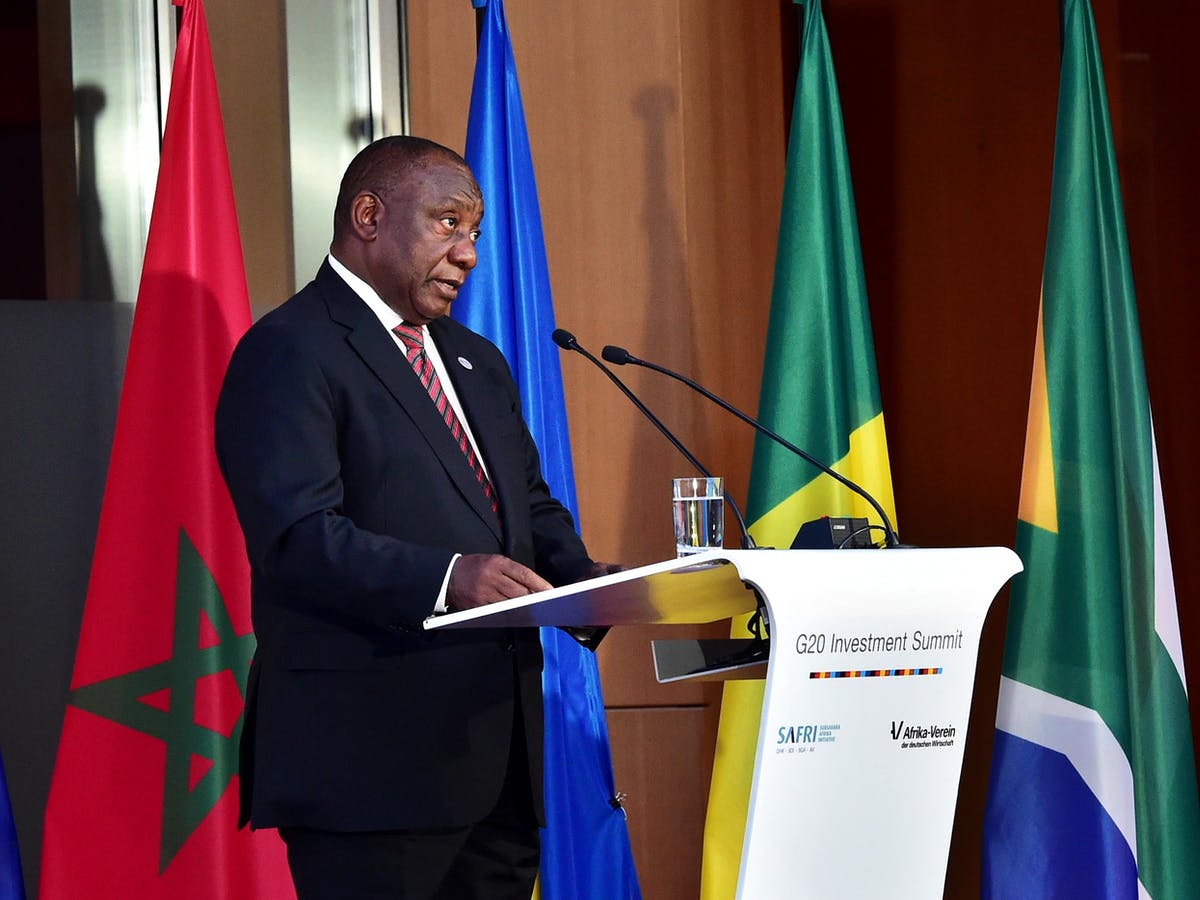
South Africa's position in International Politics has changed dramatically since the advent of democracy in 1994. This module IPC1502 attempts to provide some background against which South Africa formulates and implements its foreign policy. This module also focuses on how South Africa conducts its international relations. Subsequently, we also discuss the nature, principles and objectives of South Africa's foreign policy. This module also focuses on South Africa's relations with a selection of actors, such as states and non- state actors.

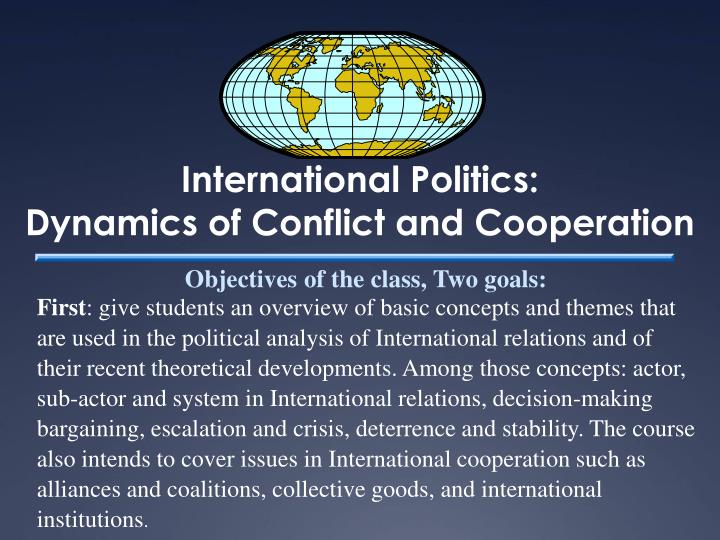

The focus of this module is on the structures and functions of the state, but the state is studied as a particular manifestation of the political organisation of humans. Therefore, the state is studied from the perspectives of a political scientist.
It is important to remember that when we study politics we study a particular aspect of the life of humans, where decisions, within a social context, are made for and enforced on a whole society. This necessarily includes a number of fields of study within the discipline of politics. Some of the fields within politics are:
- institutions,
- political dynamics (including political behaviour and public policy),
- political values and philosophy,
- political change and
- epistemology (the acquisition of knowledge).





In this short course, you will learn and practise how to write essays. Some of the critical features to good academic essay writing include
- citations
- grammar
- structure
A step by step guide is provided so that you may work through the guidelines and practise your theoretical knowledge.

This is a global glossary for all courses in the online learning category

In this section, you will find guidelines on how to use various useful applications.

|
PURPOSE OF THE UNIT STANDARD |
|
This unit standard will provide recognition for those who
facilitate or intend to facilitate learning using a variety of given
methodologies. Formal recognition will enhance their employability and also
provide a means to identify competent learning facilitators.
|

PURPOSE AND RATIONALE OF THE QUALIFICATION
Purpose:
The purpose of this qualification is to prepare and equip Public Administrators with key skills and knowledge needed to effectively operate in the public sector. It is designed to prepare these learners on how to manage, organise, and analyse the effects of government policies, and to use business and statistical tools to solve public sector challenges in an ethical manner. Learners will develop skills in budgeting and conducting research.
The Occupational Certificate is aimed at enhancing the various key functional elements of the work of a Public Service Administrator, namely:
- Planning - working out in broad outline the things that need to be done and the methods for doing them to accomplish the purpose set for the enterprise.
- Organising - the establishment of the formal structure of authority through which work subdivisions are arranged, defined, and coordinated for the defined objective.
- Staffing - the whole personnel function of bringing in and training the staff and maintaining favourable conditions of work.
- Directing - the continuous task of making decisions and embodying them in specific and general orders and instructions and serving as the leader of the organisation.
- Coordinating - the all important duty of interrelating the various parts of the work;
- OR the common thread that runs through all the activities of the organisation.
- Reporting - keeping those to whom the executive is responsible informed as to what is going on, which thus includes keeping himself/herself and his/her subordinates informed through records, research, and inspection.
- Budgeting - with all that goes with budgeting in the form of planning, accounting and control.
Rationale:
The need for effective and humanising public service delivery is manifested in key government policy and legal documents, including the Constitution of the Republic of South Africa (1996) and the White Paper on Transforming Public Service Delivery DPSA: 1997), amongst others. The Occupational Certificate: Office Administrator: Public Service Administrator seeks to provide for the needs of employees in the public sector with diverse qualifications, but who have or aspire to enter the managerial cadres. The qualification is characterised by its management-orientated approach as the duties of manager demand expertise that would normally not have been included in the undergraduate study.
Further, the qualification incorporates the eight Batho Pele principles which were devised to guide the implementation of public service delivery. These principles are: consultation; setting standards; increase access; ensuring curtsey; providing information; openness and transparency; redress and value for money.